Overview
A trading city that measures life through food.
Guangzhou is one of China’s oldest international trading ports and the cultural center of the Cantonese-speaking Lingnan region. Ancestral halls, arcaded qilou streets and old river neighborhoods sit beside a modern skyline shaped by manufacturing, migration and global commerce.
The city is most legible through daily rituals: early yum cha, markets built around freshness, late-night meals and long conversations over tea. Cantonese remains the dominant language of local life, while Mandarin works for most services; English is limited outside international hotels and central attractions.
Best time to visit
Use the cooler, drier months for this subtropical city.
October–December offers the most comfortable combination of lower humidity and clearer days. March–April is warm and green but increasingly wet. Summer is very hot, humid and storm-prone, so outdoor heritage walks work best early or late.
The strongest window for old-city walks, river evenings and long meals without peak humidity.
Warm, lush and atmospheric, with umbrellas and flexible indoor alternatives needed.
Hot, humid and rainy; build each day around shaded arcades, museums and evening river air.
Cultural highlights
Eat, listen and look through a Lingnan lens.
Guangzhou’s culture is practical, sociable and closely adapted to heat, rain and the Pearl River trade network.
- 01
Yum cha
Morning tea is a social institution: families share pots of tea and steamer baskets for hours rather than treating dim sum as a quick tasting menu.
- 02
Cantonese opera
Elaborate costume, martial movement and a distinct musical system survive in museums, theaters and occasional community stages.
- 03
Lingnan architecture
Covered qilou arcades answer the subtropical climate, while the Chen Clan Ancestral Hall shows the region’s wood, brick and ceramic craft at full intensity.
- 04
Late-night food culture
Congee shops, claypot rice, seafood and barbecue remain social well after 10 PM; siu ye is a normal part of city life.
Recommended routes
Move from old Guangzhou to the modern river axis.
The source route builds four geographically coherent days, with food treated as part of the schedule rather than an afterthought.
Classic Guangzhou
A first route through Lingnan heritage, museums, gardens and the contemporary Pearl River skyline.
- Day 1 · Chen Clan Ancestral Hall, Shangxiajiu arcades, dim sum, Shamian Island and an evening water-bus or river view.
- Day 2 · Guangdong Museum or Nanyue King Museum, Yuexiu Park and Beijing Road’s layered street history.
- Day 3 · Baiyun Mountain early, Lychee Bay, Xiguan houses and Yongqingfang with the Cantonese Opera Art Museum.
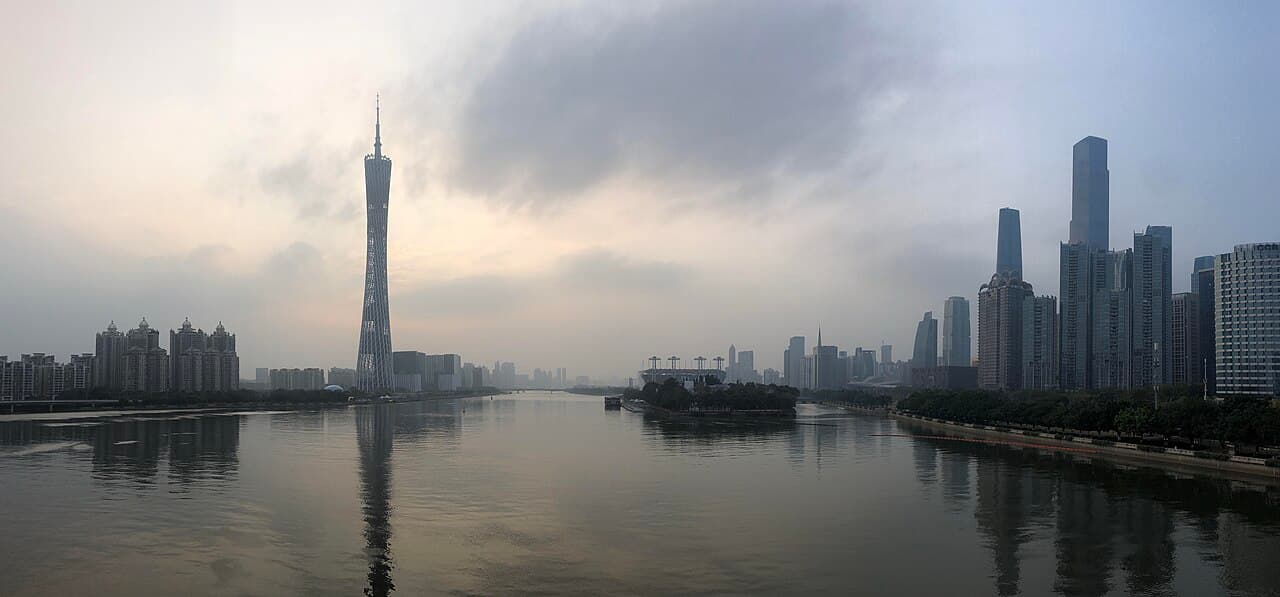
- Day 4 · Sun Yat-sen Memorial Hall, Huacheng Square, Canton Tower and the modern riverfront after dark.
Cantonese food and tea
A focused day that follows the city from breakfast tea to wholesale leaves and a late local dinner.
- Morning · Arrive early for a full yum-cha service of tea, dumplings, buns and rice-noodle rolls.
- Midday · Walk Enning Road and Yongqingfang for old-shop snacks and Lingnan streets, then cross to Fangcun Tea Market for tastings.
- Evening · Finish with congee, roast meats or seafood at a neighborhood restaurant and leave room for siu ye.